

Updated in August, 2026
Traveling with dogs in Europe can be magical – long walks through historic streets, sunny café terraces, scenic train rides, and your dog proudly acting as the tiny CEO of the whole trip. But if you are entering the European Union from outside the EU, there is one very important thing to know first: your dog’s travel documents matter as much as your own.
I learned this many times with Chilli, my Yorkshire terrier and forever Mediterranean jet-setter. Chilli and I are originally from Brazil, so traveling back and forth between South America and Europe meant dealing with pet documents, vet appointments, airline rules, and the very glamorous activity of checking paperwork at least 47 times before leaving for the airport.
This guide will help you understand the basics of traveling with dogs in Europe: what documents you may need, how to prepare before flying, what to check with transport companies, and how to make the trip genuinely dog-friendly once you arrive. For official entry requirements, always confirm your route with the European Union pet travel rules, your vet, your airline, and your destination country before booking.
Can You Travel With a Dog Around Europe?
Yes, you can travel with a dog around Europe, but you need to plan in three parts: EU entry rules, transport rules, and real-life pet-friendly logistics.
If you are entering the European Union from a non-EU country, your dog will usually need a microchip, a valid rabies vaccination, and an EU animal health certificate. Some dogs may also need extra requirements, such as a rabies antibody test or tapeworm treatment, depending on the country they are traveling from and where they are going.
Once you arrive, dog-friendliness varies a lot by country, city, hotel, restaurant, beach, train company, and attraction. Europe can be wonderfully welcoming to dogs, but not every place allows paws inside – especially museums, monuments, churches, and major tourist attractions.
That is why a successful dog-friendly Europe trip is not just about getting your dog into Europe. It is about building an itinerary that works for both of you.
If your trip includes Spain, Wander Woofs can help with pet-friendly travel planning and trusted dog-sitting, especially when you want to visit places where dogs are not allowed inside.
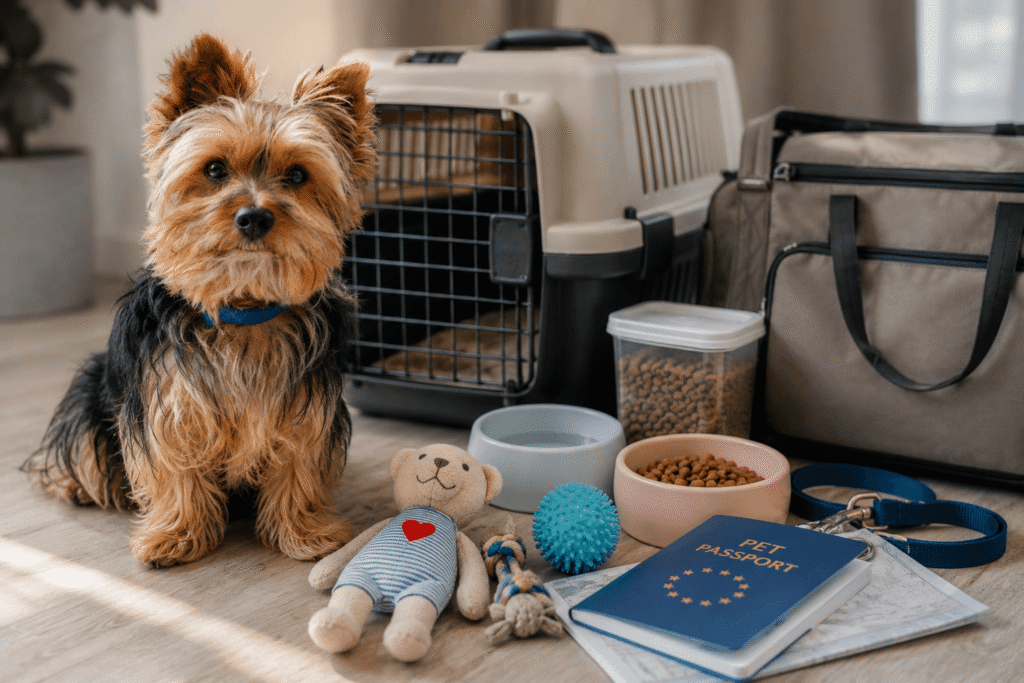
Who This Guide Is For: Non-EU Visitors Traveling to the European Union
This guide is for travelers entering the European Union with a dog from outside the EU – for example, from Brazil, the United States, Canada, Australia, Argentina, Mexico, or other non-EU countries.
That detail matters because dog travel rules are not the same for every traveler. A person already living in the EU and traveling between EU countries may use different documents than someone flying into Europe from another continent.
In this article, when I talk about traveling with dogs in Europe, I am mainly talking about:
- bringing your dog into the European Union from a non-EU country;
- preparing the documents your dog may need before arrival;
- understanding the difference between entry rules and everyday dog-friendly travel;
- planning flights, transport, hotels, and attractions around your dog’s comfort;
- making your European trip easier once you arrive, especially if your itinerary includes Spain.
This is also the type of trip I know personally. Chilli and I were originally from Brazil, so our Europe trips were never just “grab the leash and go.” They involved vet appointments, document checks, airline rules, airport logistics, and me becoming the slightly dramatic but very prepared keeper of the sacred pet paperwork folder.
And honestly? That folder deserved its own seat on the plane.
Important note: this is not a UK-specific dog travel guide
This guide is not focused on traveling from the UK to Europe with a dog. Great Britain, Northern Ireland and EU travel rules have their own details, and they deserve a separate article.
Here, the focus is broader: visitors from outside the EU traveling to the European Union with a dog.
If you are coming from the UK, you should check the official UK guidance as well as the EU rules before planning your trip. For this article, we will keep the UK details limited so we do not mix two different search intents in one post.
Europe vs. the European Union: Why This Matters When Traveling With a Dog
When people say they are “traveling to Europe with a dog,” they often mean Europe as a destination: Paris cafés, Italian villages, Spanish beaches, Portuguese road trips, Alpine trains, and one very happy dog collecting new smells like passport stamps.
But for pet travel documents, Europe and the European Union are not always the same thing.
This guide focuses mainly on entering and traveling within the European Union with a dog. That is because many official pet travel rules are EU rules, especially when it comes to entering from a country outside the EU. According to the official European Union guidance, pets entering the EU from a non-EU country may need documents such as a microchip record, rabies vaccination, and an EU animal health certificate, depending on the exact route and country of origin. You should always check the latest official information on the European Union pet travel rules before booking.
This distinction matters because not every European country follows the exact same system, and not every rule comes from the same place.
A dog-friendly trip to Europe usually involves three different layers of planning:
| Travel layer | What it means | Why it matters |
|---|---|---|
| EU entry rules | The documents and health requirements needed to enter the European Union. | This affects whether your dog can legally enter the EU. |
| Country rules | Local requirements in the country you are visiting. | These can affect transport, public spaces, beaches, parks, and accommodation. |
| Company rules | Airline, ferry, train, hotel, restaurant, and attraction policies. | These decide what your dog can actually do day by day. |
This is why a dog can be perfectly ready to enter the EU, but still not be allowed inside a museum, a church, a monument, a restaurant, or even certain beaches during high season.
The paperwork gets your dog across the border. The planning makes the trip enjoyable.
That is the part many travelers underestimate. And, as someone who has traveled internationally with a small dog, I promise you: the “tiny dog, tiny problem” theory is false. Tiny dog, full-size logistics.
If your trip includes Spain, this is where Wander Woofs pet-friendly travel planning and dog-sitting can make things easier. We help travelers think beyond the documents and plan the real-life details: where dogs can go, where they cannot, and what to do when your itinerary includes places that are not dog-friendly.
Because yes, your dog may be the most elegant traveler in Europe. But sadly, even the most charming furry tourist does not get automatic entry into every cathedral.

What Documents Do You Need to Bring a Dog to Europe?
To bring a dog to Europe from outside the EU, you usually need to prepare several official documents before travel. The exact requirements depend on where you are traveling from, which EU country you are entering, and whether your dog needs any extra health checks. According to the official European Union guidance, EU pet travel rules cover dogs, cats and ferrets, including travel from non-EU countries into the EU.
For most non-EU visitors, the key documents and requirements are:
- a microchip or valid identification;
- a valid rabies vaccination;
- an EU animal health certificate;
- a written declaration for non-commercial movement;
- sometimes, a rabies antibody titration test;
- sometimes, tapeworm treatment for specific destinations;
- entry through a designated travellers’ point of entry.
I know. It sounds like your dog is applying for a very exclusive European university. But once you understand what each document does, the process becomes much less scary.
1. Microchip or valid identification
Your dog must be identifiable before traveling to the EU. In most cases, this means your dog needs a microchip that meets EU technical requirements. The EU also accepts a clearly readable tattoo if it was applied before 3 July 2011.
The important detail is timing: for the rabies vaccination to count correctly, your dog must be microchipped before, or at the same time as, the rabies vaccine. The EU states that the microchip must be implanted before the rabies vaccination is given for the rabies vaccination to be valid for travel.
This is one of those small details that can create a very big problem if missed. Chilli was tiny, but his paperwork had to be absolutely grown-up.
2. Rabies vaccination
Dogs entering the EU must be vaccinated against rabies. For a first or primary rabies vaccination, the EU states that your pet must be at least 12 weeks old, and you must wait at least 21 days after the vaccination before traveling.
If your dog has already been vaccinated, check whether a booster is needed before travel. Booster vaccinations must be given before the previous vaccination expires; otherwise, the next vaccination may be treated as a new primary vaccination, which can restart the waiting period.
In human language: do not leave the rabies vaccine check for the week before your flight. Your dog may be ready for Europe emotionally, but the documents may strongly disagree.
3. EU animal health certificate
If you are traveling from a non-EU country into the European Union, your dog will usually need an EU animal health certificate. This is not the same as a European pet passport.
The EU animal health certificate contains information about your dog’s identity, health and rabies vaccination. It must be issued by an official State vet in the country of departure no more than 10 days before your dog arrives in the EU. After that, the certificate can be valid for travel between EU countries for up to 6 months, or until the rabies vaccination expires, whichever comes first.
This is one of the most important timing details in the whole process. Too early, and the certificate may not be valid for entry. Too late, and you may be panic-calling vets while your suitcase is half-packed and your dog is sitting on your clothes like a tiny emotional support supervisor.
4. Written declaration for non-commercial travel
The EU also says that travelers should complete and attach a written declaration to the EU animal health certificate, stating that the pet’s relocation is for non-commercial reasons. This matters because these pet travel rules are designed for private journeys, not for pets being sold or transferred to a new owner.
For most travelers, this simply means proving that your dog is traveling with you as your pet – not as part of a sale, adoption transfer, or commercial movement.
5. Rabies antibody titration test
Some dogs traveling from certain non-EU countries may need a rabies antibody titration test before entering the EU. The EU recommends checking the specific country you are traveling from to confirm whether this test is required.
When the test is required, timing becomes especially important. In some cases, the blood sample must be taken after the rabies vaccination, tested at a designated laboratory, and
7. Travellers’ point of entry
When entering the EU from a non-EU country, pets may need to enter through a designated travellers’ point of entry. At the time of entry, the competent authorities may check your dog’s documents and identity.
This means you should not only check your airline’s pet policy. You should also check whether your arrival airport, port or border crossing is suitable for pet entry into the EU.
Dogs are wonderful travel companions. They are less wonderful at explaining missing paperwork to border control.
| Requirement | Usually needed for non-EU visitors? | What to check |
|---|---|---|
| Microchip | Yes | It should be implanted before or at the same time as the rabies vaccination. |
| Rabies vaccination | Yes | Check validity, booster dates and waiting periods. |
| EU animal health certificate | Yes | It must be issued by an official State vet before entry into the EU. |
| Written non-commercial declaration | Usually yes | Confirms your dog is traveling as your pet, not for sale or ownership transfer. |
| Rabies antibody titration test | Sometimes | Depends on the country you are traveling from. |
| Tapeworm treatment | Only for certain destinations | Required for Finland, Ireland, Malta, Norway and Northern Ireland, unless official exceptions apply. |
| Travellers’ point of entry | Often relevant | Check whether your arrival airport, port or border crossing can process pets entering the EU. |
For the latest official requirements, use the European Union pet travel rules and confirm everything with your vet before booking your trip.
EU Dog Travel Checklist for Non-EU Visitors
Once you understand the main documents, the next step is putting everything in the right order. Traveling with a dog to Europe is much easier when you treat it as a timeline, not as a last-minute paperwork panic.
Here is the practical checklist I would follow before bringing a dog into the European Union from outside the EU:
Start with your vet before booking your flights.
Some requirements depend on your dog’s vaccination history, microchip date, country of origin and destination. If your dog needs a rabies antibody titration test, the process may take much longer than expected.
Check your dog’s microchip and rabies vaccine dates.
The microchip and rabies vaccination details must be correct and consistent. Pay special attention to rabies booster dates, especially if you are coming from a country where the rabies antibody test may apply.
Confirm whether your country of origin requires extra testing.
Not every non-EU country has the same requirements. Always check the official EU rules for the country you are traveling from, not just general advice online.
Plan the EU animal health certificate carefully.
This certificate has a strict timing window before arrival in the EU, so it should be coordinated with your vet, your flight date and your arrival date. This is not the document to improvise while your suitcase is already open on the floor.
Check your exact destination rules.
Some places have extra requirements. For example, dogs traveling to Finland, Ireland, Malta, Norway or Northern Ireland may need tapeworm treatment within the official time window before travel.
Confirm your airline, ferry or train pet policy before booking.
Transport companies set their own rules for cabin travel, checked baggage, cargo, carrier dimensions, dog size, breed restrictions and seasonal limitations. A route may be legally possible but still not accepted by a specific airline.
Choose accommodation that is truly pet-friendly.
“Pets allowed” is not the same as “easy with a dog.” Check weight limits, fees, room rules, nearby green areas, restaurant access and whether your dog can stay in the room alone.
Build your itinerary around your dog’s comfort.
Long travel days, summer heat, crowded cities and strict attraction rules can make a trip stressful. Plan rest days, walking breaks, shaded stops and dog care for places where dogs cannot enter.
Save everything twice. Then print it.
Keep digital copies of your dog’s documents, but also carry printed versions. I say this as someone who has traveled internationally with Chilli more than once: when pet paperwork is involved, “just in case” becomes a lifestyle.
The goal is not only to get your dog into Europe. The goal is to make the whole trip feel safe, organized and enjoyable for both of you.
And once the official documents are under control, the next question becomes just as important: how do you actually travel through Europe with a dog without turning every day into a logistical obstacle course? That is where good pet-friendly planning makes all the difference.
When Should You Start Preparing To Bring A Dog to Europe
Start preparing to travel with your dogs to Europe before you book your flights, especially if you are traveling from outside the EU. Some steps depend on your dog’s microchip date, rabies vaccination history, country of origin and final destination – and a few of them cannot be solved quickly if something is missing.
This is the part of traveling with dogs in Europe where being “a little too organized” is actually a superpower. When I used to travel between Brazil and Europe with Chilli, I learned to work backwards from the travel date: vet appointments first, documents second, flight booking only when I was confident the timeline made sense. It was not glamorous, but neither is crying over paperwork while your dog is already mentally on vacation.
A good rule of paw: start with your vet as early as possible. Ask specifically about your dog’s microchip, rabies vaccine validity, whether your country of origin requires a rabies antibody titration test, and which document you will need to enter the EU.
Before booking your flight
Before buying your ticket, confirm that your dog is eligible to travel on your intended route. This means checking both the official pet travel requirements and the airline’s own pet policy.
At this stage, ask:
Is my dog’s rabies vaccine valid for EU entry?
Does my dog need a rabies antibody titration test?
Can my dog travel in cabin, as checked baggage, or as cargo?
Does the airline accept dogs on this specific route?
Are there breed, weight, carrier size or seasonal restrictions?
Will my arrival airport work as a suitable entry point for pets?
This is where many travelers discover that “the country allows it” and “the airline allows it” are two very different sentences. When traveling with dogs to Europe, the rule is: tiny detail, huge consequences.
Before your vet appointment
Go to the vet with your full route, not just your destination country. Your vet needs to know where your dog is traveling from, where you will enter the EU, and whether you plan to continue to other countries after arrival.
Bring any previous vaccination records, microchip details, past rabies antibody test results if applicable, and your expected travel dates. If your dog has a long medical history, is older, anxious, brachycephalic, or sensitive to heat or stress, this is also the moment to discuss whether the trip is truly comfortable for them.
Chilli was small enough to look like he could travel inside a handbag full of attitude, but even with a tiny Yorkie, I still had to plan seriously. Small dogs may be easier in some ways, but they are not magically exempt from rules, stress or paperwork drama.
In the final weeks before travel
As your trip gets closer, the focus shifts from “Can my dog travel?” to “Is everything ready and consistent?”
Double-check that names, microchip numbers, vaccination dates and document details match across all paperwork. Save digital copies, print paper copies, and keep the originals somewhere easy to access during the journey.
This is also the time to prepare your dog’s travel routine:
test the travel carrier before the flight and make sure your dog is comfortable inside of it for longer periods of time. You can use it as a bed or a reward, so he creates positive feelings regarding it.
pack familiar blankets or items that smell like home; if your dog is travelling in the cargo hold, you can put a piece of clothing that smells like you so he will feel calmer.
prepare food, medication and vet-approved calming support if needed;
plan water, toilet and rest breaks;
check the weather at departure and arrival;
confirm transport from the airport to your hotel (sometimes, finding a pet-friendly cab at your destination can become a real nightmare, especially after a long flight).
The documents get your dog into Europe. The comfort planning helps your dog arrive feeling safe instead of completely overwhelmed.
The final document window
Some documents have strict timing rules close to travel, so do not assume that “done early” always means “done correctly.” For example, the EU animal health certificate for pets entering from outside the EU must be issued within a specific window before arrival, so this appointment needs to be coordinated carefully with your flight date and your vet.
This is why I recommend creating a mini travel timeline instead of keeping everything in your head. Your brain already has enough to do. It does not need to become a full-time pet immigration calendar with emotional support snacks.
Once the paperwork is ready
After your dog’s entry documents are under control, you can focus on the part of the trip most people actually imagine: where to stay, where to eat, how to move around, what your dog can join, and what to do when dogs are not allowed.
That is where pet-friendly travel planning becomes just as important as official paperwork. A dog may be legally allowed to enter Europe, but your itinerary still needs to work in real life – with hotels, transport, restaurants, sightseeing, weather, walking routes, and dog care for non-dog-friendly places.
If your trip includes Spain or Mediterranean Europe, Wander Woofs pet-friendly travel planning can help you organize the practical side of the journey, while our trusted dog-sitting service in Spain helps when your plans include places where paws sadly cannot go.
Because a great dog-friendly Europe trip is not just about crossing the border. It is about making sure your dog enjoys the adventure too – preferably with fewer surprises, more shade, and a very respectable number of sniffing breaks.
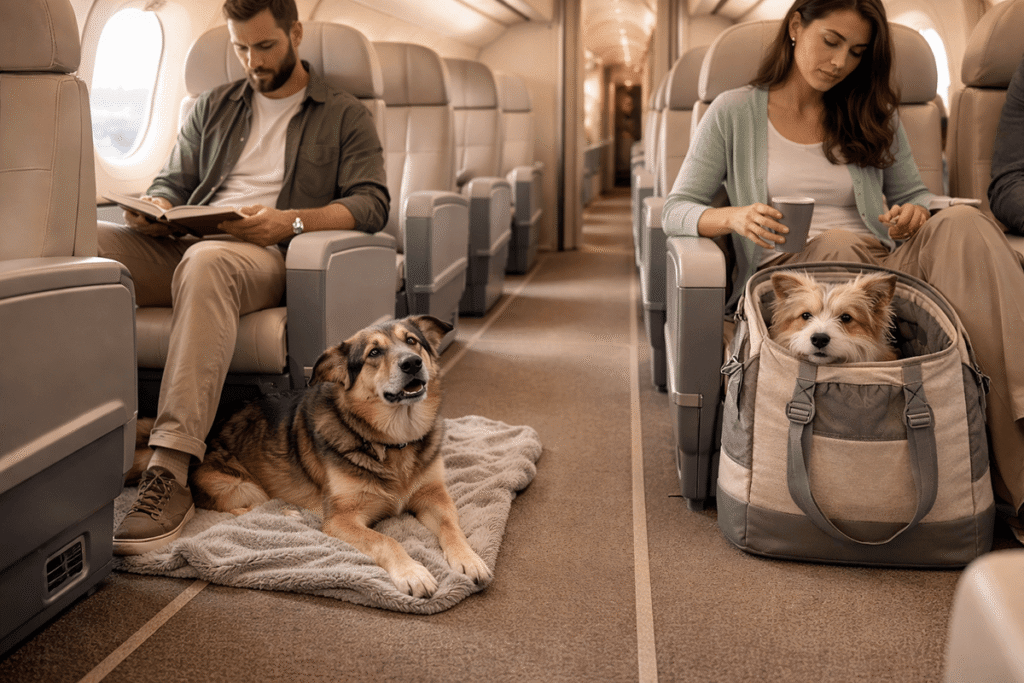
Flying to Europe With a Dog
Flying to Europe with a dog is usually possible, but it is one of the parts of the trip where you need to be extra careful. Your dog may meet the EU entry requirements, but that does not automatically mean your chosen airline will accept them in the cabin, as checked baggage, or as cargo on your exact route.
Airlines set their own pet travel rules, and those rules can vary depending on the route, aircraft, destination, season, carrier size, your dog’s weight, and whether your dog is traveling in the cabin, in the hold, or as cargo. IATA (International Air Transport Association) also notes that only small dogs and cats can usually travel in the cabin, and some airlines may not allow pets in the cabin at all, sending them instead as special baggage in a heated and ventilated hold.
This is why I always recommend checking the airline’s official pet policy before buying your ticket – not after. The sentence “I already bought the flight” has caused many pet parents a very specific type of travel headache. The kind where your dog is calm, but you are emotionally chewing the carrier strap.
Can dogs fly in the cabin to Europe?
Some small dogs can fly in the cabin to Europe, but cabin travel is never something to assume. It depends on the airline, the route, the dog’s size and weight, the carrier dimensions, and available pet spaces on that flight.
The usual idea is simple: if your dog is small enough and the airline allows it, they may be able to travel inside an approved carrier under the seat in front of you. IATA’s passenger guidance says an in-cabin pet container must comply with airline standards and fit under the seat or another space specified by the airline.
With Chilli, cabin travel was usually the dream scenario because he was tiny. But even with a small Yorkie, I never treated it as guaranteed. Small dog privilege exists, yes – but it still comes with forms, measurements, weight limits, airline rules, and a carrier that suddenly becomes the most important piece of luggage you own.
What if your dog cannot travel in the cabin?
If your dog is too large for the cabin, or if the airline does not allow pets in the cabin on your route, your dog may need to travel as checked baggage or cargo. This is where planning becomes even more important.
Before choosing this option, speak with your vet and the airline. Ask about:
the type of aircraft used on your route;
temperature restrictions at departure, connection and arrival airports;
whether pets are accepted on connecting flights;
crate requirements;
check-in procedures;
pickup procedures after landing;
whether your dog’s breed, age or health condition creates extra restrictions.
For anxious, elderly, brachycephalic, heat-sensitive or medically fragile dogs, flying in the hold or as cargo may not be the right choice. Your vet should help you decide whether the journey is safe and comfortable for your dog.
What to ask the airline before booking
Before booking a flight to Europe with your dog, contact the airline directly and ask very specific questions. Do not rely only on general travel forums, old blog posts, or “my cousin did it in 2019 and it was fine” advice. Airline pet rules can change, and even the same airline may have different rules depending on the route.
Ask:
Does this airline accept dogs on this route?
Can my dog travel in the cabin?
What is the maximum weight allowed, including the carrier?
What carrier dimensions are accepted?
Is the pet space confirmed at booking or only later?
Are there breed or age restrictions?
Are pets accepted on connecting flights?
Are there temperature or seasonal restrictions?
What documents does the airline need at check-in?
Where do I check in and pick up my dog?
IATA also advises passengers to check directly with the airline because each airline has its own regulations for transporting pets.
Think about the full journey, not only the flight
When planning a flight to Europe with a dog, think door to door: home, airport, check-in, security, boarding, flight time, arrival, document control, baggage area, transfer, hotel check-in, and your dog’s first proper walk after landing.
This is especially important if you are entering Europe after a long-haul flight. Coming from Brazil with Chilli, I learned that the arrival plan matters almost as much as the flight itself. After hours of travel, your dog does not care that you found a beautiful boutique hotel or that the taxi queue has “European charm.” They care about water, calm, a toilet break, and maybe a dramatic nap worthy of a tiny international celebrity.
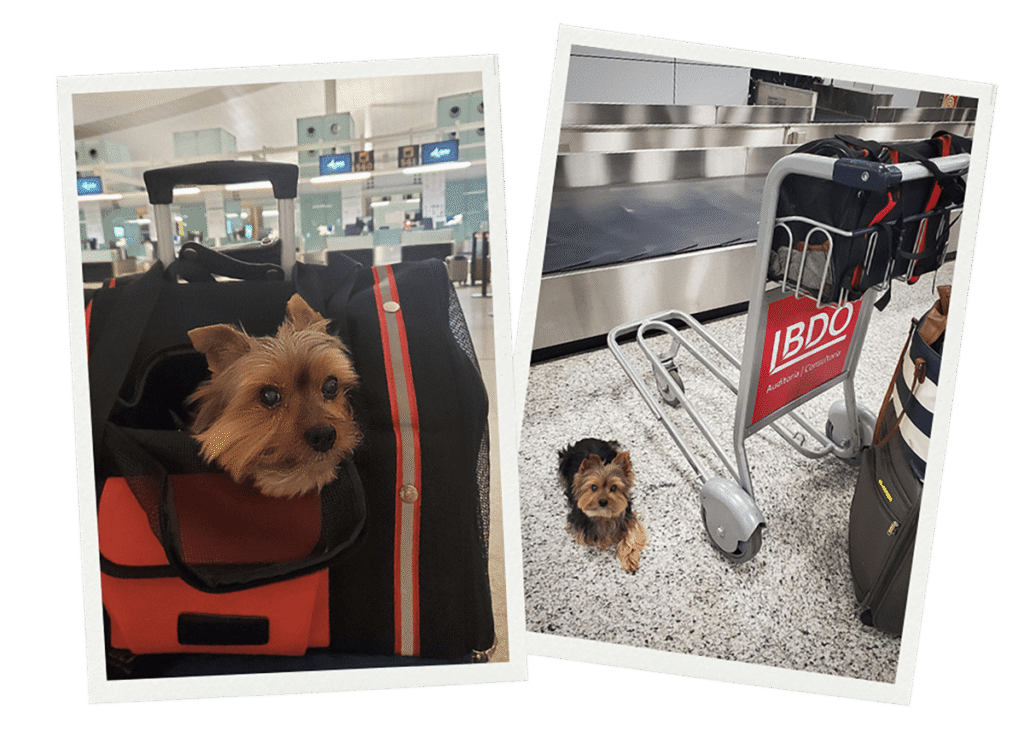
Small dogs, big logistics
Traveling to Europe with a small dog can be easier in some ways, especially if cabin travel is allowed, but it is not automatically simple. You still need the right documents, the right carrier, airline approval, and a plan for your dog’s comfort before, during and after the flight.
I always suggest testing the carrier before travel. Let your dog spend time inside it at home, add a familiar blanket, and make it feel like a safe little den rather than a suspicious zippered prison. Very important distinction. Dogs have opinions.
After landing in Europe
Once you land, keep your dog’s documents easy to access until all entry checks are complete. Do not pack them deep inside a suitcase unless you enjoy unpacking your life in front of border staff while your dog silently judges your organizational system.
Make sure you stop at the designated pet entry control area when you arrive, so your dog’s documents can be checked and their entry properly validated. It may sound obvious, but in some airports — including places like Lisbon or Barcelona — this area is not always clearly signposted. I have seen travelers walk straight past it without anyone stopping them, and honestly, I almost did it myself once. The problem is that skipping this step can cause real issues later, especially when you travel again within Europe or try to leave and re-enter with your dog. When in doubt, ask airport staff where pets arriving from non-EU countries need to be checked. Better a slightly awkward question than a paperwork drama worthy of a telenovela.
After arrival, give your dog time to decompress. Avoid planning an intense sightseeing day immediately after a long flight. A calm walk, food, water, rest and a quiet first evening can make the beginning of the trip much smoother.
If your itinerary includes Spain, Wander Woofs can help with pet-friendly travel planning in Europe and trusted dog-sitting in Spain, especially once you start planning the attractions, museums and cultural sites where dogs cannot go inside.
Because flying gets your dog to Europe. Good planning helps them actually enjoy being here. Tiny passport holder, big feelings.

Traveling With Dogs In Europe by Train, Ferry or Car
Once your dog has entered Europe legally, the next question is how you will move around. Traveling through Europe with pets can be wonderful, but the rules are not universal. Trains, ferries, rental cars, taxis and private transfers may all have different pet policies, even within the same country.
This is where many travelers relax too soon. The official documents may get your dog into the European Union, but they do not automatically get your dog onto every train, ferry, bus or transfer. Sadly, Europe is not one giant dog-friendly blanket – although Chilli would absolutely have approved that concept.
Traveling by train with a dog in Europe
Train travel can be one of the most comfortable ways to explore Europe with a dog, especially if your route avoids long airport waits and stressful cargo situations. But train pet rules vary by country and operator.
Before booking, check:
whether dogs are allowed on that train route;
whether small dogs must travel in a carrier;
whether larger dogs need a leash or muzzle;
whether your dog needs a separate ticket;
whether pets are allowed in all seating classes;
- whether there are restrictions on high-speed or international trains.
Do not assume that one train company’s rules apply everywhere. A relaxed local train and a high-speed international train can feel like two completely different worlds – one says “welcome aboard,” the other says “please read paragraph 17 of our pet policy.”
Traveling by train with a dog in Spain
Spain has recently become much easier to explore by train with a medium or large dog. Renfe now allows dogs weighing up to 40 kg to travel without a carrier on eligible AVE, Avlo, Long Distance, Avant and Media Distancia trains. Small dogs and other permitted pets weighing up to 10 kg can still travel inside a carrier, so the traditional Chilli-sized option remains available too.
The conditions depend on the exact train and fare, and not every departure automatically accepts a large dog. When booking, look for the paw symbol 🐾 showing that the up-to-40-kg service is available. There are also specific rules concerning tickets, seating, muzzles, leashes, documents and which dogs are eligible.
Planning to travel through Spain by rail? Read our complete guide to traveling on Renfe trains with a dog in Spain, including the new rules for dogs up to 40 kg. You can also check the latest conditions directly on Renfe’s official pet-travel page.
Taking ferries with dogs in Europe
Ferries can be a useful option when traveling with a dog in Europe, especially around Spain, Italy, France, Greece, Portugal and the islands. Some ferry companies offer pet-friendly cabins, kennels, or designated pet areas, while others have stricter rules.
Before booking a ferry, ask:
Are dogs allowed on this route?
Can my dog stay with me in the cabin?
Are pet-friendly cabins available?
Is there a kennel area?
Can my dog access outdoor decks?
Are muzzles or leashes required?
What documents must be shown at boarding?
This is especially important for island travel. A ferry may look like a charming Mediterranean adventure, but your dog’s experience depends entirely on the company’s rules, the route, the season and the type of accommodation you book onboard.
Road trips with dogs in Europe
A road trip can give you more flexibility when traveling to Europe with a dog. You can plan breaks, avoid crowded transport, carry your dog’s food and supplies, and stop when your furry co-pilot decides that one specific patch of grass is clearly the highlight of the journey.
Still, road trips need planning too.
Check:
pet rules for rental cars;
cross-border rental restrictions;
safety requirements for dogs in cars; in Spain, for example, traffic rules require animals to be properly secured so they do not interfere with the driver or cause distractions.
pet-friendly hotels along the route;
rest stops and green areas;
temperature and parking safety;
whether your dog gets carsick or anxious.
Never leave your dog alone in a parked car, especially in warm weather. European summers can be intense, and Mediterranean heat does not care how “quick” your stop is.
Private transfers, taxis and local transport
For shorter journeys, do not assume every taxi, ride-hailing service or private driver will accept dogs. Some are flexible, especially with small dogs in carriers, but others may refuse pets or require advance notice.
When possible, arrange pet-friendly transfers before arrival. This is especially useful after a long flight, when both you and your dog are tired, carrying luggage, and not in the mood for a dramatic curbside negotiation.
Wander Woofs pet-friendly travel services can help you organize dog-friendly transfers so your arrival goes as smoothly as Chilli’s hair!
The golden rule: check the exact operator
For every transport option, the golden rule is the same: check the exact company, exact route and exact date before booking. Pet policies can change, and they can differ depending on the destination, season, vehicle type or ticket class.
A good dog-friendly route is not just the one that looks beautiful on a map. It is the one your dog can actually travel comfortably, legally and safely.
If your trip includes Spain, start with our guide to traveling on Renfe trains with a dog and explore our pet-friendly travel planning services if you would like help organizing the full route. Because the best dog-friendly trips are not improvised at the station gate – they are planned with paws, paperwork and patience in mind.

Is Europe Dog-Friendly for Travelers With Dogs?
Europe can be wonderfully dog-friendly, but not everywhere, not all the time, and definitely not in the same way from country to country. Some cities make traveling with a dog feel easy and natural, while others require much more planning around transport, restaurants, museums, beaches and accommodation.
This is one of the biggest surprises for travelers. Getting your dog into Europe is one thing. Creating a truly dog-friendly itinerary is another.
In many European destinations, you may find dogs relaxing under café tables, walking through historic neighborhoods, joining their humans at outdoor terraces, or traveling on public transport with the right conditions. In other places, dogs may be restricted from beaches in high season, not allowed inside major attractions, or accepted by hotels only under very specific rules.
So instead of asking, “Is Europe dog-friendly?” the better question is:
Is my exact route dog-friendly for my exact dog?
Because a young, confident city dog and an anxious senior dog will experience the same itinerary very differently. Chilli was tiny, curious and very used to travel, but even with him I still had to plan around heat, crowds, long walks, restaurant rules, hotel policies and the occasional “sorry, no dogs inside” moment.
Pet-friendly hotels are not all the same
A hotel saying “pets allowed” does not always mean the stay will be easy with a dog.
Before booking, check:
whether there is a weight limit;
whether there is an extra pet fee;
whether dogs can stay alone in the room;
whether dogs are allowed in common areas;
whether there are parks or green areas nearby;
whether the hotel is close to the attractions you want to visit;
whether the room layout is comfortable for your dog.
A hotel can technically accept dogs and still be awkward for a pet-friendly trip. Very “yes, but make it complicated” energy.
Restaurants, cafés and terraces
In many parts of Europe, outdoor terraces are often easier with dogs than indoor dining rooms. But rules vary a lot by country, city and individual business.
My advice is simple: never assume. Ask politely, check recent reviews, and when possible, choose places with outdoor seating, enough space, and a relaxed atmosphere. Your dog may be welcome, but they still need to feel comfortable – especially in busy cities, narrow terraces, or crowded summer destinations.
Beaches, parks and outdoor spaces
Beaches and parks are one of the best parts of traveling in Europe with a dog, but they are also where seasonal rules matter most.
Some beaches allow dogs year-round. Others only allow dogs outside the bathing season. Some cities have dedicated dog beaches or off-leash areas, while others are much stricter. Always check the local rules for the exact beach, season and municipality before going.
This is especially true in Mediterranean destinations, where summer heat, crowds and sand temperature can make beach days harder on dogs than humans expect. If the pavement is too hot for your hand, it is too hot for their paws. Tiny feet, big drama, very valid complaint.
If you’re coming to Barcelona, check our Best Dog Friendly Beaches In And Around Barcelona Guide here!
Museums, monuments and attractions
This is where many dog-friendly Europe trips hit the biggest obstacle.
Even in cities that feel very welcoming to dogs, many museums, churches, monuments, palaces and major tourist attractions do not allow dogs inside, except for assistance dogs. That means you need a plan for the moments when your dog cannot join you.
This is exactly why Wander Woofs exists. In Spain, we help travelers with trusted dog-sitting near major attractions and pet-friendly travel planning in Europe, so you do not have to choose between seeing the places you came for and keeping your dog safe, happy and cared for.
The real secret: plan for your dog, not just with your dog when traveling with dogs to Europe
A good pet-friendly Europe trip is not about squeezing your dog into a human itinerary. It is about building a trip that works for both of you.
That may mean slower mornings, fewer hotel changes, shaded walks, pet-friendly transfers, dog care during museum visits, and choosing destinations where your dog will actually enjoy the experience.
Your dog does not care if you visit twelve countries in ten days. Your dog cares about comfort, routine, water, rest, smells, snacks and being close to you.
Honestly? A pretty excellent travel philosophy.
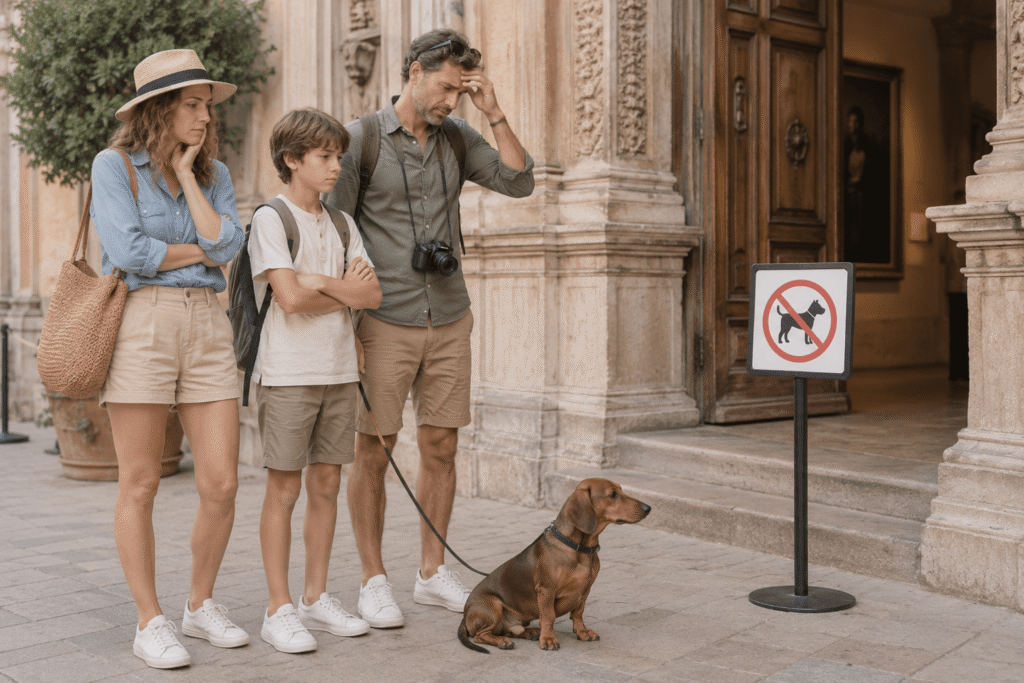
What to Do When Dogs Are Not Allowed Inside Attractions
One of the most important things to plan when traveling with a dog in Europe is what to do when dogs are not allowed inside attractions. Museums, monuments, churches, palaces, historic houses and major cultural sites often have strict pet policies, even in cities that feel very dog-friendly in daily life.
This is where many travelers get stuck.
You may have planned the perfect European trip with your dog – lovely hotel, scenic walks, outdoor cafés, cute travel bowl, the whole furry dream – and then suddenly realize that your dog cannot join you inside the one place you flew across the world to visit.
The good news? This does not mean you have to skip the attraction or leave your dog alone at your hotel room.
You just need a plan.
Check attraction rules before building your itinerary
Before booking tickets, always check the official website of each attraction you want to visit. Do not rely only on old blog posts, social media comments or “someone said it was fine” advice.
Look specifically for:
whether dogs are allowed inside;
whether only assistance dogs are accepted;
whether dogs are allowed in outdoor areas but not indoor spaces;
whether carriers make any difference;
whether the attraction has timed entry;
how long the visit usually takes;
whether there are nearby shaded areas or parks.
This is especially important for famous attractions, where tickets may be timed, non-refundable or booked weeks in advance. The last thing you want is to arrive at the entrance, dog in arms, ticket in hand, and discover that your carefully planned day has turned into a very expensive sidewalk moment.
Avoid leaving your dog alone in the hotel room
Some hotels allow dogs to stay alone in the room, but many do not – and even when it is allowed, it is not always the best option.
A hotel room is an unfamiliar space. Your dog may hear strange noises, housekeeping, doors closing, elevators, other guests, or city sounds. Even a calm dog can become stressed in a new environment, especially after travel.
Before leaving your dog alone anywhere, ask yourself:
Is my dog used to being alone in unfamiliar places?
Does the hotel allow it?
Could housekeeping enter the room?
Is there a chance my dog may bark, scratch, panic or try to escape?
How long will I really be gone?
What happens if the attraction visit takes longer than planned?
Chilli was a confident little traveler, but even then, I never loved the idea of leaving him alone in a hotel room unless I was completely sure it was safe, allowed and comfortable for him. Dogs do not understand “I’ll just be two hours inside a cathedral.” They understand: “My human disappeared and this room smells suspicious.”
Fair.
Plan dog care near the attraction
The best solution is often to plan dog care around your sightseeing, especially for major attractions that do not allow dogs inside.
Instead of choosing between your dog and your itinerary, you can organize a trusted sitter or walker to care for your dog nearby while you visit. That way, your dog gets attention, water, movement, shade and calm supervision – and you get to enjoy the attraction without rushing through it with one eye on your phone and the other on your guilt.
This works especially well for:
museums;
churches and cathedrals;
palaces;
historic monuments;
guided tours;
exhibitions;
food experiences;
long restaurant meals;
attractions with timed entry.
If you are visiting Spain, this is exactly where Wander Woofs dog-sitting for tourists can help. We can meet you near major attractions, care for your dog close by, and send updates while you enjoy the visit.
Your dog gets a calm mini-adventure. You get the museum. Nobody has to pretend that hiding a terrier in a tote bag is a serious travel strategy.
Build dog breaks into your sightseeing days
Even when attractions allow dogs in some outdoor areas, sightseeing days can be tiring. Crowds, heat, noise, stairs, queues, cobblestones and public transport can be a lot for a dog.
When planning your day, include:
water breaks;
shaded rest stops;
quiet streets or parks;
shorter walking blocks;
time to decompress after crowded places;
backup plans if your dog gets tired or overwhelmed.
A good dog-friendly itinerary has rhythm. It is not just “Can my dog technically come?” It is “Will my dog actually enjoy this?”
That question changes everything.
Use pet-friendly travel planning for complicated itineraries
If your trip includes several cities, countries or non-dog-friendly attractions, pet-friendly planning becomes much more valuable. You need to think beyond one museum or one hotel and look at the whole flow of the trip.
For example:
Which cities are easier with your dog?
Which hotels are genuinely practical?
Which attractions will require dog care?
Which travel days are too long?
Where will your dog rest?
What happens if plans change?
Are there pet-friendly restaurants near your hotel?
Will the summer heat affect your schedule?
This is where Wander Woofs can also help through pet-friendly travel planning in Europe, especially for travelers visiting Spain and Mediterranean Europe with their dogs.
Because a truly dog-friendly trip is not just about finding places that say “pets allowed.” It is about creating a route where your dog is safe, comfortable and part of the adventure — even when paws cannot enter every building.
The goal: no guilt, no rushing, no sidewalk panic
When dogs are not allowed inside attractions, the goal is not to force the situation. The goal is to plan around it kindly.
Your dog should not be left stressed in a hotel room. You should not have to skip everything you came to Europe to see. And nobody should be standing outside a world-famous monument Googling “dog sitter near me” with 4% battery and a confused furry baby.
Plan ahead, check the rules, and organize care where needed.
That way, your dog gets a safe and happy break – and you get to enjoy Europe properly, without the guilt trip. The emotional one, not the travel one.

How Wander Woofs Helps With Pet-Friendly Travel in Spain and Mediterranean Europe
Traveling with dogs to Europe becomes much easier when you know what to expect before you arrive. That is where Wander Woofs comes in.
We help travelers plan smoother pet-friendly trips through pet-friendly travel planning and trusted dog-sitting in Spain, especially when your itinerary includes places where dogs sadly cannot go – museums, monuments, churches, major attractions, restaurants, events, or long guided visits.
Because the real challenge is not only “Can I bring my dog to Europe?”
It is also:
“How do I actually enjoy the trip once we are there?”
Pet-friendly travel planning
Through our pet-friendly travel support, we help travelers think through the practical side of the trip:
- choosing dog-friendly destinations;
- finding truly pet-friendly hotels;
- planning realistic routes;
- checking transport options;
- understanding attraction limitations;
- building rest time into the itinerary;
- avoiding unnecessary stress for your dog;
- organizing dog care when needed.
This is especially helpful in Spain and Mediterranean Europe, where the trip may look beautifully relaxed from the outside – sunshine, terraces, beaches, old towns, charming villages – but still requires careful planning around heat, crowds, hotel rules, transport, and attractions.
The goal is simple: your dog should not just be “allowed” on the trip. Your dog should be comfortable on the trip.
Very different thing. Very important furry distinction.
Dog-sitting for tourist days in Spain
Wander Woofs also offers trusted dog-sitting for travelers in Spain. This is designed for the exact moment when you want to visit somewhere amazing, but your dog cannot come inside.
Instead of leaving your dog alone in a hotel room or skipping the attraction, you can book a Wander Woofs sitter to care for your dog nearby.
Depending on the location and timing, this may include:
- meeting near the attraction or an agreed nearby point;
- a calm walk or relaxed sitting time;
- water and shade breaks;
- updates while you visit;
- care adapted to your dog’s age, temperament and needs.
Your dog gets company and care. You get to enjoy the visit. Everyone avoids the classic “sad dog at hotel, guilty human at museum” situation. A win for culture, paws and emotional stability.
White Paws: extra support for more complex trips
For travelers who need more complete planning support, our White Paws pet-friendly travel services helps organize the bigger picture of a dog-friendly trip.
This can be useful if you are planning a multi-city itinerary, traveling with a senior or sensitive dog, combining Spain with other Mediterranean destinations, or simply feeling overwhelmed by the number of rules, options and “are dogs allowed?” tabs open on your browser.
White Paws is not a replacement for official veterinary or legal guidance. You should always check EU entry requirements with official sources and your vet. But once the paperwork side is clear, we can help with the practical travel experience: where to stay, how to move around, what to avoid, and how to plan around your dog’s comfort.
A smoother trip for humans and dogs
Wander Woofs exists because traveling with your dog should not mean missing the best parts of Europe – and it should not mean putting your dog in stressful situations either.
With the right planning, you can enjoy the museums, monuments, food, architecture, beaches, cafés and beautiful little streets you came for, while your dog is safe, cared for and included in the rhythm of the journey.
Planning a dog-friendly trip to Spain or Mediterranean Europe? Explore our pet-friendly travel planning in Europe or book a trusted dog sitter in Spain for the places where paws cannot go.
Because sometimes the best travel plan is simple: you enjoy Europe, your dog gets safe and happy care, and no one has to stand outside a museum trying to explain why their furry travel companion deserves a cultural exception.

Common Mistakes When Taking a Dog to Europe
Traveling with dogs to Europe is completely possible, but the process is not very forgiving when something is missed. A tiny date, document or policy detail can create a very big travel problem – and sadly, airport counters are not famous for accepting “but my dog is adorable” as official paperwork.
Here are the most common mistakes I would avoid.
Booking flights before checking pet rules
Do not book your flight before confirming that your dog can actually travel on that route. The EU may allow your dog to enter, but the airline still decides whether pets are accepted in the cabin, in the hold, or as cargo on that specific flight.
Always check the airline’s pet policy before paying for your ticket.
Letting the rabies vaccine expire
This is one of the biggest problems I have seen with travelers from countries where a rabies antibody titration test may apply.
If the rabies booster is not given before the previous vaccine expires, the EU may treat the next vaccine as a new primary vaccination, which can restart waiting periods and create serious delays. The official EU guidance explains that rabies vaccination validity depends on timing, including microchip and vaccination order, primary vaccination rules, and booster validity.
In real life, that can mean new appointments, new paperwork, extra costs, and possibly not being able to travel when planned. One missed calendar reminder can become a full pet travel telenovela.
Confusing an EU pet passport with an EU animal health certificate
A European pet passport is not always the document non-EU visitors use to enter the European Union for the first time. If you are traveling from outside the EU, your dog will usually need an EU animal health certificate issued before arrival, according to the official EU pet travel rules.
This confusion is very common because people hear “pet passport” and assume it is the magic golden ticket. Sometimes it is not. Sometimes the magic ticket is a very specific certificate with a very specific timing window. Glamorous? No. Important? Absolutely.
Assuming “pet-friendly hotel” means “easy dog-friendly trip”
A hotel that allows dogs is a good start, but it does not mean your whole trip will be dog-friendly.
Before booking, check whether the hotel has weight limits, extra pet fees, room restrictions, nearby green areas, restaurant access, and rules about leaving dogs alone in the room. A hotel can say “pets allowed” and still be inconvenient for your actual itinerary.
Forgetting about attractions that do not allow dogs
Many European museums, monuments, churches, palaces and cultural attractions do not allow dogs inside, except assistance dogs. This can surprise travelers who planned everything around pet-friendly hotels and outdoor walks, but forgot about sightseeing.
Before buying tickets, check attraction rules and plan dog care if needed. In Spain, Wander Woofs dog-sitting for tourists can help when your itinerary includes places where paws sadly cannot go.
Planning too many destinations
Fast travel is hard on dogs. Changing hotels every night, taking multiple trains, adding long transfer days, and squeezing five cities into one week may sound exciting for humans, but it can be stressful for your dog.
A slower itinerary is usually better: fewer moves, more rest, familiar routines, and enough time for walks, meals, water breaks and decompression.
Your dog did not cross the ocean to become a backpacker with jet lag.
Underestimating heat, crowds and city stress
Europe can be intense in summer, especially in Mediterranean destinations. Hot pavement, crowded streets, long queues, busy terraces and public transport can be overwhelming for dogs.
Plan early walks, shaded breaks, water stops and quiet time. If your dog is senior, anxious, brachycephalic, heat-sensitive or not used to cities, build the trip around their comfort – not around how many landmarks you can fit into a day.
Not printing documents
Digital copies are useful, but printed documents are still your best friend when traveling with a dog. Keep paper copies of your dog’s health certificate, rabies vaccination details, microchip information, test results if applicable, airline confirmation and any other relevant paperwork.
I say this with love and experience: when someone asks for your dog’s documents, that is not the moment to discover your phone battery is at 3%.
Skipping the pet entry control area
When you arrive in the EU from a non-EU country, make sure you stop at the designated pet entry control area so your dog’s documents can be checked and their entry properly validated. It may sound obvious, but in some airports this area is not always clearly signposted.
I have seen travelers walk straight past it without anyone stopping them – and honestly, I almost did it myself once. The problem is that skipping this step can cause real issues later, especially when you travel again within Europe or try to leave and re-enter with your dog.
When in doubt, ask airport staff where pets arriving from non-EU countries need to be checked. Better a slightly awkward question than a paperwork drama worthy of a telenovela.
The biggest mistake when taking a dog to Europe: thinking paperwork is the whole trip
The documents are essential, but they are only the beginning. A successful dog-friendly Europe trip also needs comfortable transport, realistic hotel choices, dog-friendly routes, rest days, attraction planning and care options for places where dogs cannot enter.
The goal is not just to bring your dog to Europe.
The goal is to make sure your dog actually enjoys being here.

Final Planning Tips For Traveling With Dogs To Europe:
Traveling with a dog to Europe is not impossible, and it should not feel terrifying. It just works better when you plan the trip around your dog’s real needs, not only around human sightseeing dreams and a very optimistic Google Map.
Before you travel, keep these final tips in mind.
Plan fewer stops
A slower itinerary is usually better for dogs. Instead of changing cities every night, choose fewer bases and stay longer. Your dog will have more time to settle, rest, sniff the neighborhood properly, and understand that yes, this hotel room is now temporarily part of the kingdom.
Check official rules before booking
Always confirm your dog’s entry requirements with official sources, your vet, your airline, and your destination country before booking. Rules can depend on where you are traveling from, where you are entering the EU, your dog’s vaccination history, and your final route.
Keep documents organized
Carry printed and digital copies of your dog’s documents, including microchip details, rabies vaccination records, health certificate, test results if needed, transport confirmations, and any extra paperwork required for your route.
Your dog may travel light emotionally, but administratively? They are basically a tiny international executive.
Build rest into the itinerary
After flights, trains, ferries, long car rides or busy sightseeing days, your dog needs time to decompress. Plan calm walks, quiet evenings, shade, water breaks, and slower mornings. A tired dog is not always a happy dog – sometimes they are just a furry tourist in need of a nap.
Think about heat, crowds and surfaces
European cities can be hot, crowded and noisy, especially in summer. Pavement, sand and stone streets can become uncomfortable for paws. Plan walks early in the morning or later in the day, choose shaded routes, and avoid dragging your dog through packed attractions or long queues.
Check every “pet-friendly” claim
Pet-friendly does not always mean the same thing. A hotel, restaurant, train or beach may technically allow dogs but still have weight limits, fees, carrier rules, seasonal restrictions, or areas where dogs cannot go. Always check the details.
Plan dog care for non-dog-friendly places
If your trip includes museums, monuments, churches, food tours, guided visits or attractions where dogs are not allowed, plan dog care in advance. This keeps your dog safe and comfortable, and lets you enjoy the experience without rushing, worrying, or standing outside with a ticket in one hand and a very confused furry tourist in the other.
In Spain, Wander Woofs dog-sitting for tourists can help with these moments, while our pet-friendly travel planning in Europe can help you design a smoother trip from the beginning.
Remember the real goal
The goal is not just to bring your dog to Europe. The goal is to enjoy Europe together in a way that feels safe, realistic and happy for both of you.
That may mean fewer cities, more breaks, better hotels, smarter transport, and a little help when paws cannot enter every place on your itinerary.
And honestly? That is not a compromise. That is good travel.
Planning a dog-friendly trip to Spain or Mediterranean Europe?
Wander Woofs can help with pet-friendly travel planning and trusted dog-sitting, so your dog is cared for while you enjoy the places where paws sadly cannot go.
Because the best trips are the ones where everyone comes home with good memories – humans, dogs, and the tiny travel blanket that somehow becomes the most important item in the suitcase.